Tex John Smith
In Cold BloodTex John Smith, Perry Smith’s father, was a former rodeo performer, fur trapper, prospector, and builder whose life of movement shaped his son’s childhood. Their relationship joined affection, shared work, and outdoor skills to long periods of separation and a final break at an Alaskan lodge. In Perry’s recollections and in a statement Tex wrote in hopes of helping him obtain parole, he appears both as a committed father who tried to provide for his son and as a man whose roaming, strictness, and limited understanding helped make closeness difficult.
Identity and Early Life
Tex performed on the rodeo circuit with his wife, Florence Buckskin. She was a professional bronc rider, and he, too, performed as a rodeo cowboy. Their four children watched them compete; Perry, the youngest, remembered his parents’ showmanship as a source of pride and excitement. When illness forced the couple to leave rodeo work, they settled near Reno, Nevada. Their marriage deteriorated, and Florence began drinking before leaving for San Francisco with the children during the Depression.
In his account of the family’s separation, Tex presented himself as a sober and responsible parent. He said that he had taught the children the Golden Rule, expected them to keep clean and do their work, and believed in admitting wrongdoing. His version also stressed the painful separation from his other children: he said he eventually obtained custody, but could not take them all into his home, and arranged for the others to live elsewhere. These details come from the account he prepared for the parole board, a document Perry kept among his most valued papers and had read many times.
Father and Son on the Road
Perry’s childhood memories partly support and partly complicate his father’s account. After their parents separated, he repeatedly ran away hoping to find Tex. When Tex located him in a schoolyard in San Francisco, Perry wanted to leave with him, but Tex told him to stay and be good. Later, after Perry had been placed in institutions, Tex returned when his son was seriously ill and took him away. The reunion led to a period of living together near Reno, followed by years of travel in a homemade trailer Tex called a house car.
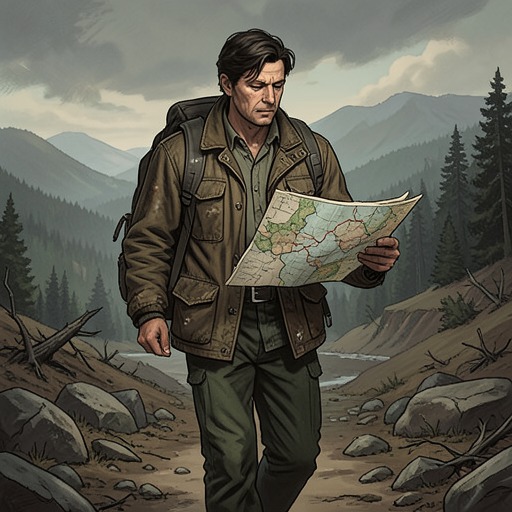
The house car held two bunks and a small cooking galley. Perry remembered baking bread and making preserves as the pair moved from place to place. They traveled through western states and eventually to Alaska, where Tex taught him to hunt, trap, use a gun, and search streambeds for gold. Tex’s account also described Perry attending school when possible and learning quickly, but the boy’s schooling ended after the third grade. In Alaska, the two shared hard outdoor work and close quarters; Perry remembered sleeping beside his father for warmth and helping make their living.
That life offered practical instruction but not much room for Perry’s less utilitarian abilities. He recalled being able to play harmonica and guitar, draw, read, and make up songs, yet felt that Tex did not recognize or encourage those talents. As Perry grew older, he increasingly felt that his father could not understand important parts of him. Tex’s own description emphasized the kind of work he and Perry could do—trapping, carpentry, hunting, and operating heavy equipment—and their preference for independence. The difference between the two accounts reveals both their shared competence and a gap in what each understood as valuable.
The Lodge and the Break
After Perry’s motorcycle accident, surgery and recovery delayed his reunion with Tex. While Perry recuperated with a family near Bellingham, Tex prepared a site for a hunting lodge in Alaska, clearing land and gathering timber and stone. He waited to begin construction until Perry arrived, and father and son built the lodge together, with occasional help. It could accommodate twenty people and included a large dining-room fireplace and a cocktail lounge where Perry was expected to entertain guests. They opened Trapper’s Den Lodge at the end of 1953.
The business did not attract the hunters Tex and Perry had expected. A few tourists stopped to look, but few stayed overnight. They tried to draw visitors with a garden, a wishing well, and signs along the highway, but these efforts brought little income. As money and food ran short, Tex blamed Perry for not doing his share; Perry recalled that the pressure and hunger made the two increasingly antagonistic. Their quarrel erupted over a biscuit. Perry said he lost control and that Tex broke away and returned with a gun, only for both men to discover it was unloaded. Tex began to cry, and Perry’s anger gave way to pity for them both.
The reconciliation did not restore their life together. Perry walked in the snowy woods, and when he returned the lodge was dark and locked; his belongings had been put outside. He left with his guitar, no money, and no settled destination, accepting a ride from a truck driver. The lodge’s failure thus became a turning point in the relationship: a shared project intended to sustain father and son ended in estrangement, and Perry continued his journey without Tex.
A Father’s Account and a Son’s Future
Tex later tried to help Perry through a written biography submitted to the Kansas State Parole Board. He described Perry as mechanically gifted, suited to outdoor work, and capable of loyalty and honesty when treated fairly. He also acknowledged that his son had done wrong and insisted that he must answer to the law. The document combined a father’s defense of his child with an account of discipline, work, and consequences. For Perry, it was emotionally charged: he kept it with personal mementos and returned to it repeatedly, though reading it stirred painful and conflicting feelings.
Tex’s statement also offered material support for a future reunion. He said he would share what he had with Perry and had arranged for life insurance to help his son begin again after release. At the same time, the document described Tex’s own continuing independence: he had sold his Alaskan lodge, remained interested in prospecting, and hoped to establish another small home. His language made provision for Perry conditional on survival and release, a promise of care that could not resolve their existing distance.
The Lone Wolf and His Absence
When investigators tried to locate Tex, a post-office clerk in Nevada said his mail was being forwarded to the vicinity of Circle City, Alaska. The clerk described him as an older man who dressed in Western clothes and called himself the Lone Wolf. Tex received few personal letters but many catalogs and advertising pamphlets, and he sometimes disappeared for weeks, saying he had gone prospecting. The same clerk recalled that Perry had come looking for his father before the two left for Alaska. This account reinforced the image of a man who could be found through his mail yet remained difficult to pin down.
During Perry’s imprisonment, Tex did not write to him or visit. He was presumed to be prospecting somewhere in Alaska, and lawmen were unable to find him despite their efforts. Perry recorded a dream of being in Alaska with his father, a brief return in imagination to the landscape and relationship that had marked his youth. The dream contrasts with the actual separation: Tex’s remembered presence remained powerful, but no reunion took place in the evidence presented. His story is therefore not simply one of paternal devotion or abandonment. It is the account of an attachment sustained through shared labor, remembered tenderness, practical promises, and absence, with the final break at the lodge standing as the most decisive change in their lives together.